Care begins with understanding the concern.
Whether the concern is tooth pain, a previously treated tooth, appearance or a longer-term dental plan, a consultation helps make the next step clear.
Treatment discussions, made clear.
Choose a category to see the concerns and services that may be relevant. Every plan begins with an individual assessment.
Root Canal & Repeat Root Canal Treatment
Treatment for both first-time root canals and teeth that have already undergone root canal treatment but continue to cause problems or have not healed as expected.
- Root canal treatment
- Repeat root canal treatment (Re-RCT)
- Assessment of previously treated teeth
- Infection and symptom review
Preserving the tooth whenever possible.
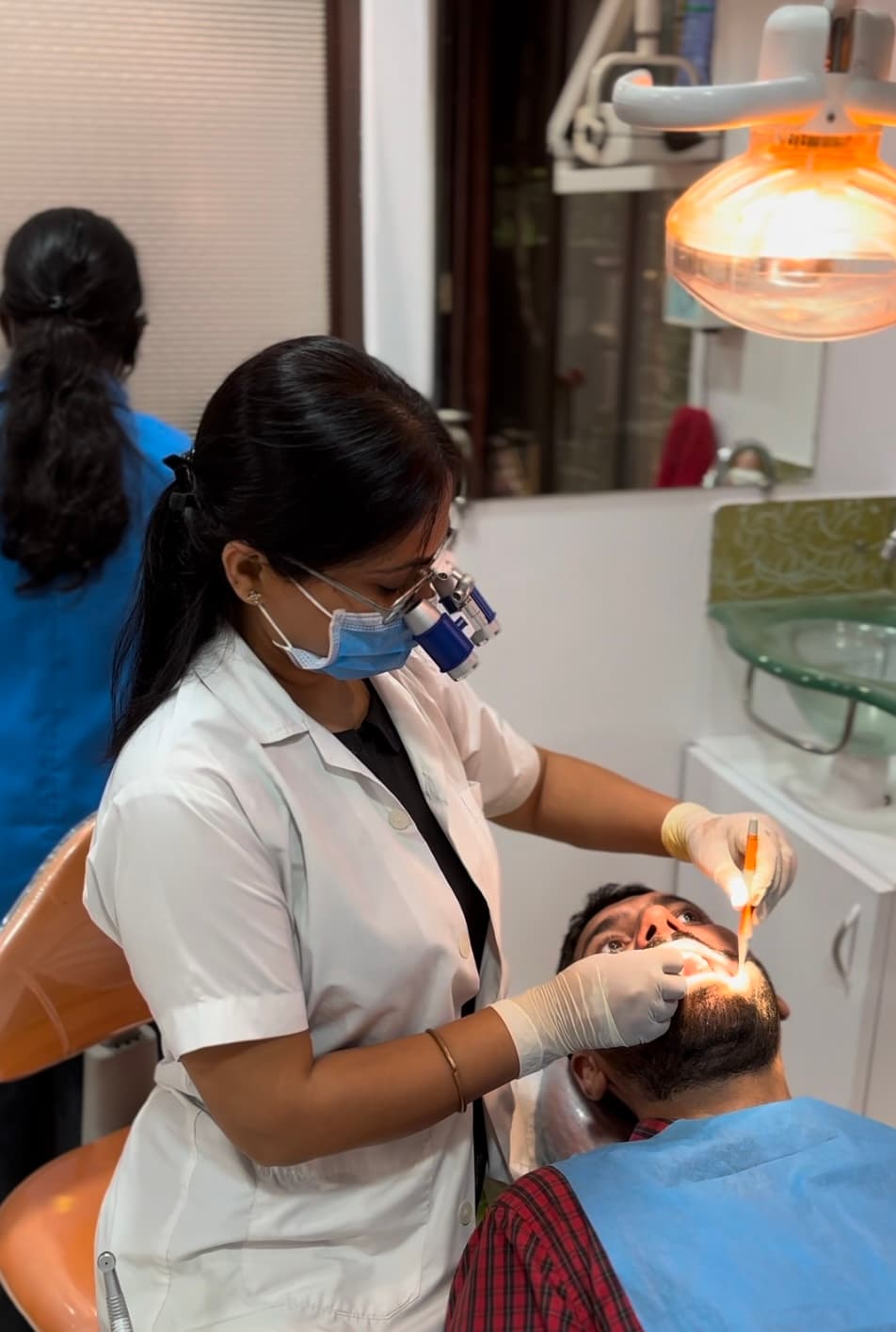
Root canal treatment is used when the soft tissue inside a tooth becomes inflamed or infected. The affected tissue is removed, the inside of the tooth is carefully cleaned and disinfected, and the canals are filled and sealed. The purpose is to treat the source of the problem while preserving the natural tooth whenever it can reasonably be saved.
At Rootz Dentz, treatment begins with understanding the tooth as well as the person experiencing the problem. Diagnosis, treatment options and the steps involved are explained clearly before proceeding, with an emphasis on precision, gentle care and preserving healthy tooth structure wherever possible.
Already had a root canal — but the tooth is troubling you again?
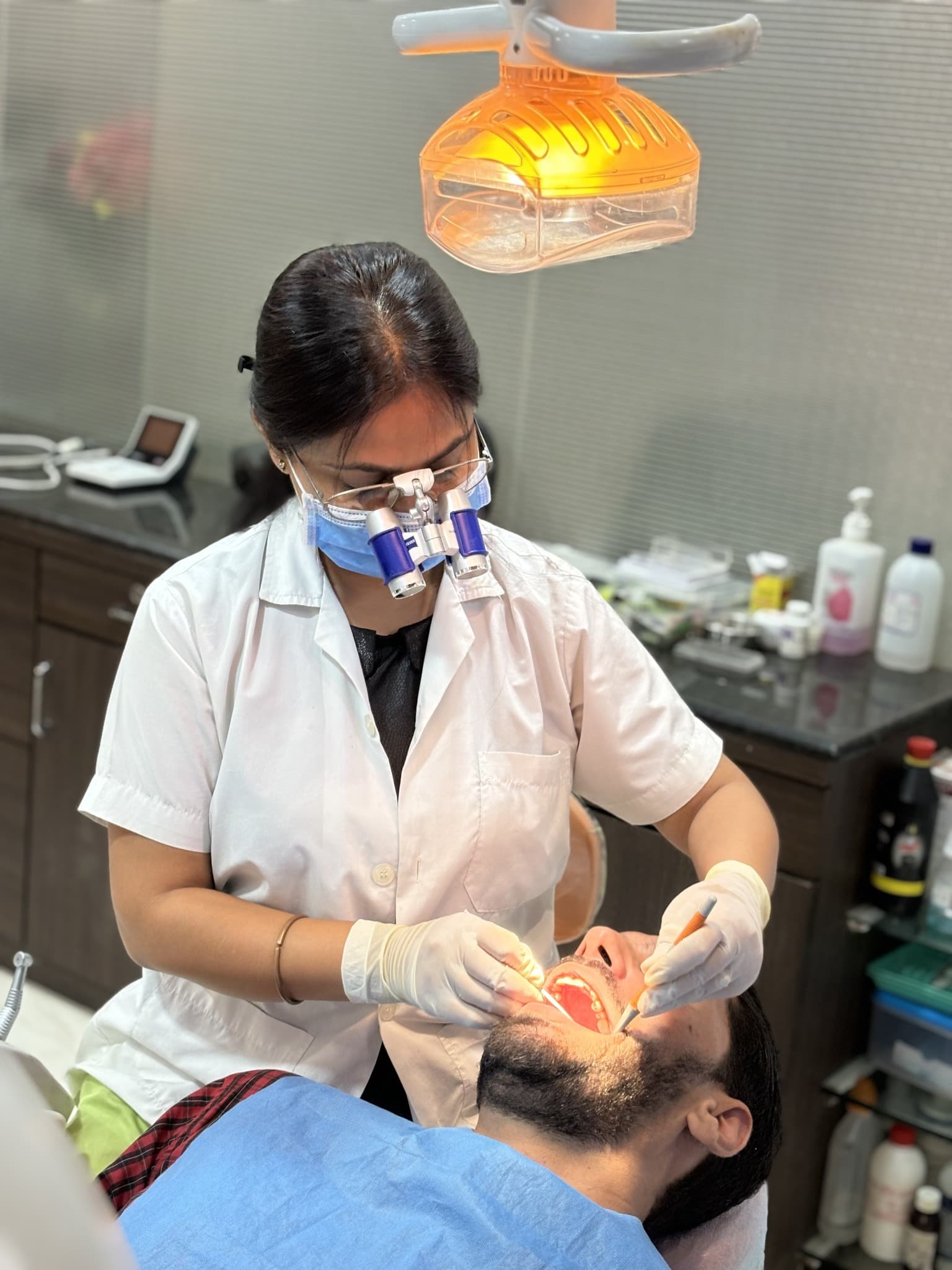
A previously root-canal-treated tooth does not always mean that the next step is extraction. In suitable cases, the tooth can be carefully reassessed and may be treated again through root canal re-treatment, commonly called Re-RCT or repeat root canal treatment.
A particular area of Dr. Swati Bharti’s practice is treating teeth that have already undergone root canal treatment but continue to cause pain, develop infection, show persistent symptoms after a previous root canal or have not healed as expected.
Previously treated teeth often require more detailed assessment. Existing root canal material may need to be removed so the canals can be reassessed, cleaned and treated again where appropriate. The first step is understanding why the previous treatment has not resolved the problem and whether preserving the natural tooth remains a suitable and predictable option.
Thoughtful changes. A smile that still feels like you.
Cosmetic dentistry is not about creating the same smile for everyone. Tooth shape, proportion, colour, facial features and the patient’s own preferences all matter. Our approach is conservative and highly personalised, with the aim of enhancing a smile without losing what makes it individual.
Aesthetic decisions are more considered when the whole smile — and the person behind it — is part of the plan.
Veneers are thin, custom-made restorations placed over the visible surface of selected teeth to improve shape, proportion, colour or appearance. Careful planning considers the surrounding teeth, gums, facial features and how much natural tooth structure can be preserved.
A midline gap, also called a diastema, is the space between the two front teeth. Depending on its cause, size and the surrounding teeth, it may sometimes be reduced or closed using carefully shaped tooth-coloured composite, while other cases may need a different approach.
Smile design considers tooth shape, size, proportion, alignment, colour, gum display and their relationship with the face. Planning is guided by the patient’s concerns and expectations; where appropriate, photographs and digital planning may help communicate possible changes before treatment.
The rest of the care you may need.
Restorative and general dentistry addresses everyday concerns such as decay, damaged teeth and lost tooth structure. Care starts with assessing the condition of the tooth and explaining the options for restoring function and comfort.
Dental implants may be considered when replacing a missing tooth or teeth. The process begins with a careful review of bone, gums, bite and the wider treatment plan so that the next steps are clearly understood.
Aligners and braces can address concerns about tooth position and bite. An assessment helps establish whether orthodontic treatment is suitable and how it may fit with the health and appearance of the rest of the smile.
Children’s dental care supports developing teeth and helps families understand prevention, habits and treatment where needed. Appointments are paced to help children feel comfortable while parents receive clear guidance.
Clarity before a decision.
We begin by understanding what has brought you in. Dr. Swati Bharti explains what she sees, answers questions and talks through the possible next steps in plain language.
For people who feel highly anxious about dental treatment, care can include listening, pre-treatment counselling, explanation, reassurance, comfortable pacing and follow-up.
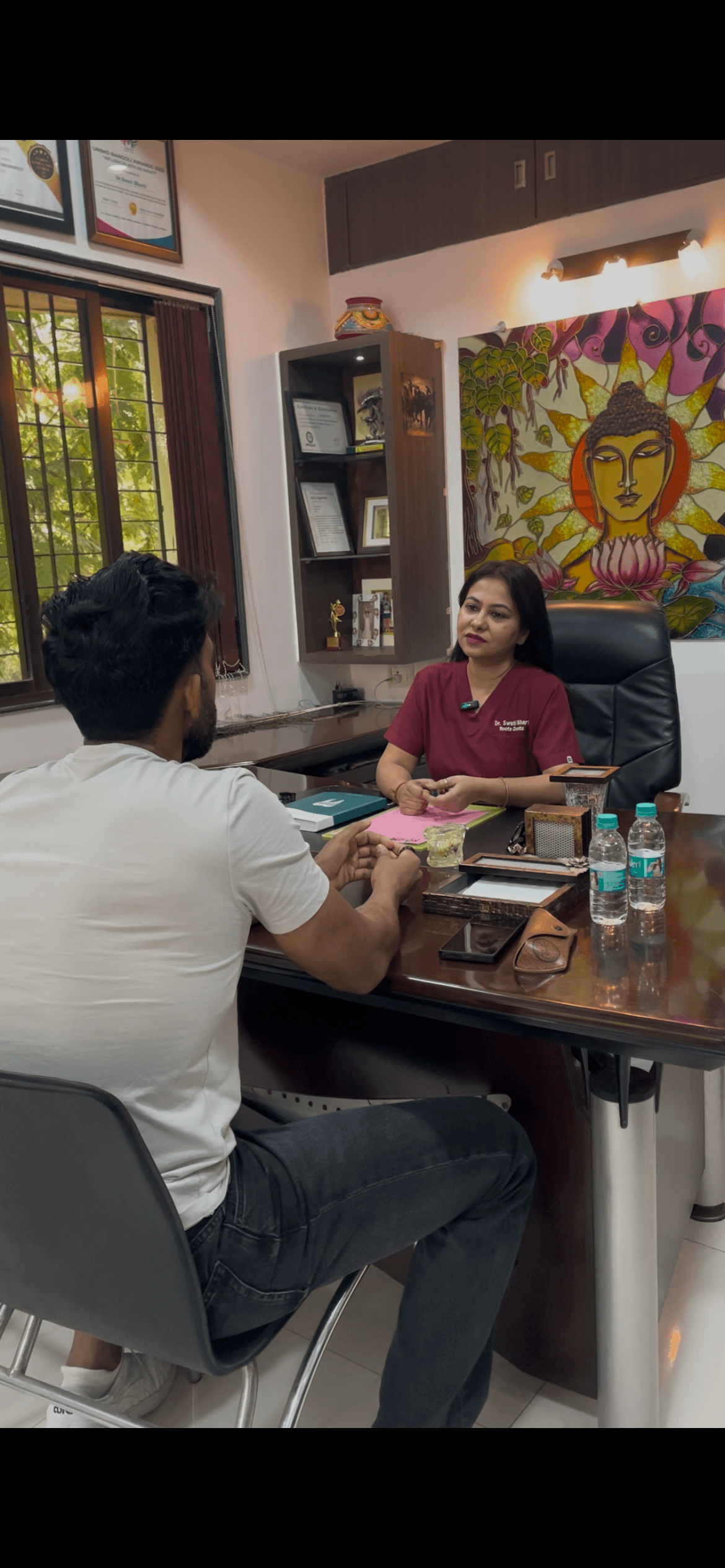
Start with a conversation.
Tell us what is concerning you, and our team can help you understand the next step.